
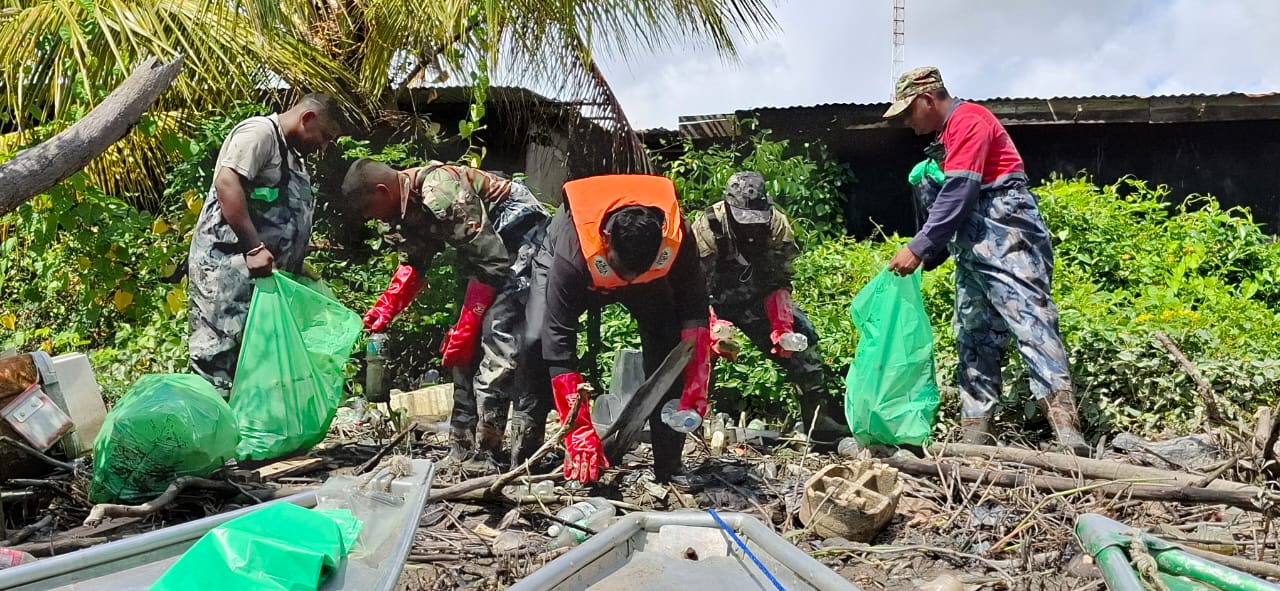
Paramaribo, Suriname — The Green Heritage Fund Suriname (GHFS) is pleased to announce the launch of four community-led environmental initiatives under the Caribbean Organizations for a Resilient Environment (CORE) Project of the Caribbean Biodiversity Fund (CBF) Gender Smart Facility (GSF), funded by Global Affairs Canada (GAC).
With a combined investment of more than USD 140,000, these initiatives will support communities in Marowijne, Nickerie, Wan Hattie, and Saamaka areas to protect biodiversity, strengthen climate resilience, preserve traditional knowledge, and create sustainable opportunities for women and youth.
The projects are being implemented by four experienced local organizations:
● Stichting Kibii Foundation — preserving traditional taro and cocoyam varieties and establishing a community botanical garden in Moengo;
● Stichting Het Moederhart — restoring approximately 12 kilometers of degraded mangrove habitat in Nickerie through community-led waste removal, environmental education, and ecosystem monitoring;
● Stichting Tropenbos International Suriname — empowering Saamaka youth, especially young women, as leaders in climate adaptation and sustainable forest management; and
● Stichting ARELIS — supporting climate-smart agroforestry, sustainable livelihoods, and women’s economic empowerment in Wan Hattie.
Together, these projects demonstrate how local knowledge, community leadership, and inclusive environmental action can create lasting solutions to the challenges of climate change and biodiversity loss.
“Suriname’s greatest strength in protecting its natural heritage lies in its people,” said Monique Pool, Director of Green Heritage Fund Suriname. “By investing in communities, women, and youth, we are supporting solutions that protect ecosystems, strengthen livelihoods, and build resilience for generations to come.”
GHFS is proud to work alongside community partners, the Caribbean Biodiversity Fund, the CORE Project, the Gender Smart Facility, and Global Affairs Canada to advance locally driven climate and conservation solutions.
The projects will be implemented over the next 15 months and will generate benefits ranging from ecosystem restoration and sustainable agriculture to youth leadership, food security, and the preservation of cultural and ecological knowledge.
The Caribbean Organizations for a Resilient Environment (CORE) project is implemented by the Caribbean Biodiversity Fund in partnership with Global Affairs Canada.
ABOUT THE CARIBBEAN BIODIVERSITY FUND
With around 1,600 globally threatened species, the Caribbean is a hotspot for some of the most critically endangered plants and animals. The Caribbean Biodiversity Fund (CBF) was established in 2012 to create reliable, long-term funding for conservation and sustainable development in the Caribbean region. The CBF was designed as part of the Caribbean Challenge Initiative. Today, the CBF is a regional umbrella environmental fund that uses a flexible structure to implement innovative solutions and consolidate resource mobilisation in the Caribbean through a range of financial instruments.
Working towards the vision of a Caribbean region where both its natural environment and people thrive, the organisation measures total assets under management, annual return on investments, competency improvements and global initiatives as the key performance indicators that directly contribute to its mission. Currently, the CBF has 3 programs: the Conservation Finance Program, based on an endowment fund; the Climate Change Program, focused on Ecosystem-based Adaptation (EbA) strategies; and the Nature-based Economies Program, with an Advancing Circular Economy focus.
To date, the CBF has provided financing for more than 100 projects across the Caribbean, valued at over US$30 million, demonstrating a significant commitment to the preservation of the region’s biodiversity.
CANADA’S INTERNATIONAL ASSISTANCE IN THE CARIBBEAN
Canada’s development programming in the Caribbean region is focused on mutual priorities, such as climate and economic resilience, sustainable and inclusive governance, and advancing gender equality.
Following the 2017 hurricane season that devastated the Caribbean, Canada announced a 5-year $100 million Pledge for Caribbean Reconstruction and Economic and Climate Resilience. The pledge was fulfilled in 2022 and included strengthening natural disaster planning and response through organisations such as the Caribbean Disaster Emergency Management Agency.
At the CARICOM Heads of Government Meeting in The Bahamas, Canada announced $44.8 million in new initiatives to help support CARICOM in addressing the climate crisis by protecting more biodiversity and improving climate resilience and disaster preparedness. Canada continues to advocate for small island and low-lying states in the Caribbean, which are particularly vulnerable to the impacts of climate change, like rising sea levels and extreme weather events.

 English
 Nederlands